Things to do in Hiroshima,
ranked and priced.
Start with the correction: the castle keep closed permanently on 22 March 2026, and three of the ten pages ranking for this city still tell you to climb it. Everything below carries a time, a yen price and a verdict — except the Peace Park sites, which we list and never rank.
Give Hiroshima two days, not four hours. Day one is the Peace Memorial Park and the city around it; day two is Miyajima, timed to the tide. The castle keep closed permanently on 22 March 2026 — its grounds are still free and still worth 45 minutes, but the tower you read about is gone. Trams are a flat ¥240 ($1.52) and the day pass is ¥700 ($4.44).
Lead with the thing every other list gets wrong
The correctionHiroshima Castle's main keep is shut. Not for renovation, not for a season — permanently, since 22 March 2026.
Hiroshima Castle's keep closed to the public on 22 March 2026 — after 68 years — because the 1958 reinforced-concrete reconstruction no longer met earthquake standards. A wooden rebuild is planned but years out. The grounds, the moat, the bomb-scarred stone walls and the Ninomaru reconstruction are all still open, and all still free. The tower you came to go inside is not.
That single fact reorders the whole list. The castle was the second or third item on almost every English page about this city, always with a line about the view from the top and often with an admission price attached. Both the view and the price are now fiction. Read the full picture on our Hiroshima Castle page, then send the view request to Orizuru Tower instead.
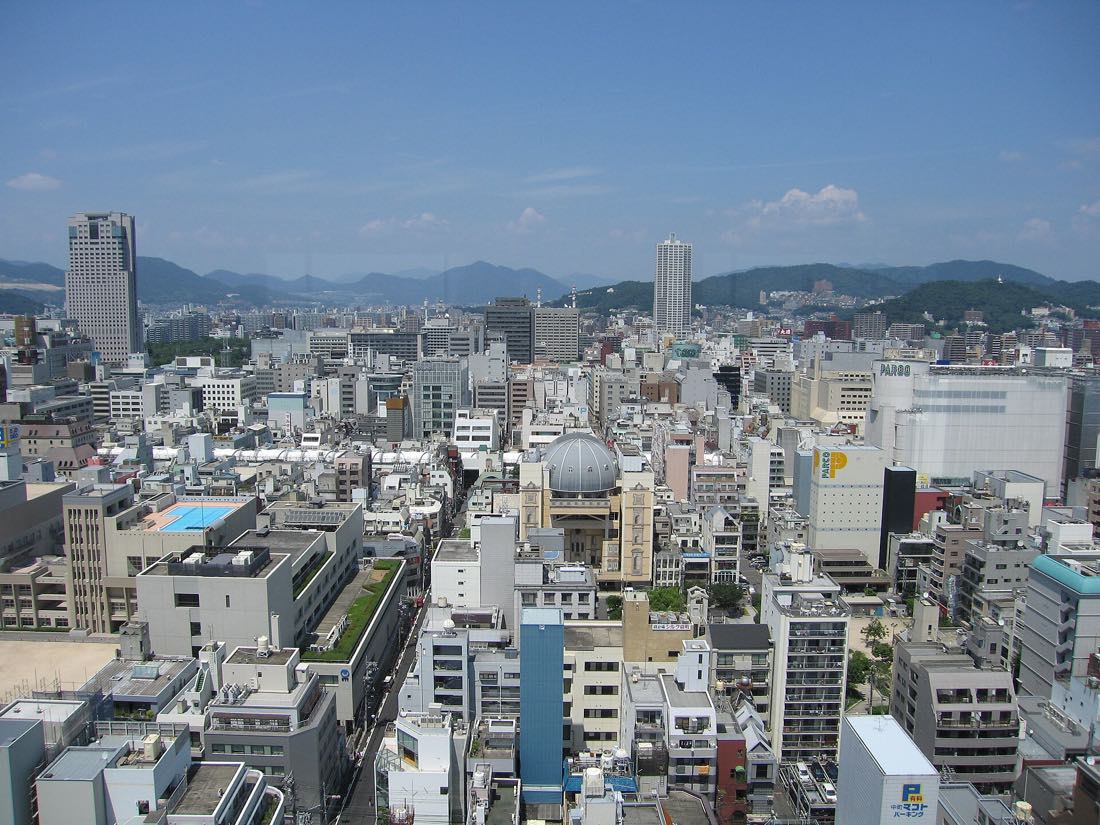
Hiroshima is a comfortable, well-run, entirely ordinary mid-size Japanese city. The bomb took the old fabric and the rebuild was practical rather than picturesque. Come for the Peace Park, the island and the food — not for the streetscapes. The mistake almost everyone makes is giving the important part four hours and the ordinary part none.
So the honest shape of a Hiroshima trip is: one demanding morning in the park, one island day, and then a city that rewards small, specific choices — a ¥350 garden, a baseball crowd, a waterfall temple twenty minutes out, an okonomiyaki counter with eight seats. That is what the ranked list below is for.
Dollar prices convert at ¥157.7 = $1, the rate on 4 August 2026. Treat every $ figure as a snapshot and the ¥ figure as the real price.
The Peace Memorial Park and its sites
Not rankedThese are not on the ranked list below and they never will be. They are not attractions competing with a shopping arcade for your afternoon.
We do not put a verdict badge, a score or a value calculation on the Peace Memorial Museum, the Park, the A-Bomb Dome or the Cenotaph. ¥200 against 140,000 dead is not a price-to-value judgement, and ranking them 1st against a baseball game 7th would be the wrong sentence in the wrong register. What we will do is tell you exactly how they work.
The museum is ¥200 ($1.27) for adults, ¥100 for high-school students and over-65s with a passport, free for junior-high and under. The audio guide is ¥500 ($3.17) in 15 languages and runs about 70 minutes. Doors open at 7:30 and almost nobody uses that hour. Allow two hours inside, three if you read properly, and leave the two hours afterwards empty.
From 8 to 16 August 2026 the Peace Memorial Museum takes no walk-ups at all: online reservation only, capped at 1,000 people an hour, released 90 days ahead. Outside that window the 11:00–14:00 block is pre-booked entry only. The museum opens at 7:30 and almost nobody uses it.
There is one thing here that almost no travel site carries: a free daily talk in English at 13:00 in the East Building Basement 1, no reservation, 60 minutes including questions, delivered by a trained legacy successor passing on one survivor's testimony. It is on our hibakusha testimony page and on the free list. A solo traveller can simply walk in.
If your dates land on 6 August, read the ceremony page before you plan anything else — the park is closed to the public 05:00–09:00 that morning and the museum does not open until about 09:45.
Peace Park sites — hours, price and time needed
The park, practicallyNo verdict column. These are the facts you need to plan the morning, nothing more.
| Site | Time needed | Price | Kids | Rainy-day OK |
|---|---|---|---|---|
| Peace Memorial Museum | 2–3 hours | ¥200 · audio guide ¥500 | 13+ comfortably; see the kids page | Yes — indoors throughout |
| Peace Memorial Park | 45–90 min | Free, always open | Fine at any age | Partly — it is an open park |
| A-Bomb Dome (Genbaku Dome) | 15 min | Free, exterior only | Fine | Exterior only, so no |
| National Peace Memorial Hall | 30–45 min | Free | Quiet, suits older children | Yes — underground |
| Teishin Hospital annex (new, 1 May 2026) | 45 min | Free · closed Mondays | Suits 12+ | Yes |
| The 13:00 English talk | 60 min | Free, no booking | 12+ | Yes |
Full detail, including the 8–16 August reservation-only window, is on the museum page. Conduct questions — photography, peace signs, what is actually posted — are answered on the etiquette page.
The city and the island, in order
Ranked- 01
Miyajima and the floating torii
The single best day out from Hiroshima and the reason two days beats one. The catch is that the island runs on the tide, not the clock: above roughly 250cm the Great Torii appears to float, below roughly 100cm you walk out to it across the sand, and the two states are about six hours apart. Check the tide table before you book the ferry. Between 10:00 and 15:00 it is a queue with an island attached.
- 02
An okonomiyaki counter — not the food court
Hiroshima okonomiyaki is layered rather than mixed and contains noodles; that is the whole difference from the Osaka style, and it is the city's one genuinely distinctive thing to eat. Sit at a counter — Nagataya, Micchan or Hassei — and watch it built on the steel plate in front of you. Okonomimura is the stacked-stall building everyone is sent to — around two dozen stalls, hours varying by stall — and we give it its own verdict. Verified prices: Micchan Sohonten's soba or udon niku-tama is ¥960 ($6.09), ¥1,840 with oysters, closed Tuesdays and walk-in only; Nagataya, ten seconds from the park, runs ¥1,000–1,999 and is also closed Tuesdays.
- 03
Hiroshima Castle grounds — the keep is shut
Hiroshima Castle's keep closed to the public on 22 March 2026 — after 68 years — because the 1958 reinforced-concrete reconstruction no longer met earthquake standards. A wooden rebuild is planned but years out. The grounds, the moat, the bomb-scarred stone walls and the Ninomaru reconstruction are all still open, and all still free. The tower you came to go inside is not. The keep has not been demolished — the exterior is still there to photograph — and the city says the wooden rebuild is not a decided project, with its own earliest possible completion at FY2049. What is new is the Sannomaru quarter, opened 29 March 2026: five tenants including a Hassei-lineage okonomiyaki shop, an eel restaurant and a mini archery range. The castle now has a reason to visit that it did not have a year ago.
- 04
Shukkeien Garden
The best ¥350 ($2.22) in the city — and free if you are 65+ with ID or in high school or under, since the price change of 14 April 2025. A compressed 1620 stroll garden with a pond loop that takes 40 unhurried minutes, ten minutes' walk from the castle and sharing a site with the Prefectural Art Museum: the ¥660 combined ticket saves ¥200. It burned in 1945 and was rebuilt.
- 05
Carp baseball at Mazda Zoom-Zoom Stadium
Widely described as the best atmosphere in Japanese baseball, and it appears in essentially no English list of things to do in Hiroshima. That gap is the whole argument for this site: it is the ordinary city that everyone skips. Carp home games sell out routinely — Hiroshima is one of NPB's hardest tickets. Buy through the official site the moment sales open; resale at the gate is not a plan. Check carp.co.jp for prices and the calendar.
- 06
Mitaki-dera — the three-waterfall temple
Ranked 9th on TripAdvisor's list for this city by the people who actually went, and absent from every English listicle. A mossy hillside temple with three waterfalls, a vermilion pagoda moved here in 1951 for the bomb's victims, and almost no crowd. Better in rain than most of Hiroshima, and very good in late November.
- 07
Orizuru Tower
This is where the castle's lost view went, and with the keep shut it is now the city's main paid viewpoint. ¥2,200 ($13.95) adult, ¥1,400 junior and senior high, ¥900 elementary, ¥600 from age 4, plus a ¥100 paper-crane fee; 10:00–18:00, last entry 17:30, with unlimited same-day re-entry. The deck looks straight down on the Dome and the spiral ramp is a genuinely good descent — but safety mesh crosses the glass and spoils most photographs, which at ¥2,200 is worth knowing first.
- 08
Mount Misen and the Miyajima ropeway
Worth it if you have a clear day and half a day spare; not if you are squeezing the island into an afternoon. The ropeway drops you at Shishiiwa, not the summit — the real top is another 30 minutes of steep rock each way. Ride up, walk down: ¥1,100 ($6.97) one way beats ¥2,000 ($12.68) return and removes the 16:30 last-descent risk. Note that Reifudo near the summit burned down on 20 May 2026 and a detour is in place.
- 09
Hondori and the covered arcades
Half a kilometre of roofed shopping street running from the Peace Park end to Hatchobori. On a dry day it is a pleasant ten-minute walk to somewhere else. On a wet day it is the spine of the city and the reason you do not have to abandon the afternoon — which is exactly why it leads the rainy-day page.
- 10
Mazda Museum
Free, genuinely interesting, and impossible to add to a trip you are planning this week. It is 完全予約制 — reservation-only, online booking only, no phone, no email, no walk-ups — and it runs Monday to Friday plus a handful of Saturdays (5 Sep, 10 Oct, 7 Nov, 5 Dec 2026). It is closed 8–17 August 2026 for the company holiday. Tour times, duration, English availability and age limits could not be verified — check the booking system. One major guide ranks it second in Hiroshima and mentions none of this.
- 11
Saijo, the sake-brewery town
Seven working breweries within a few minutes of Saijo station, red-brick chimneys and free tastings — a good half day if you like sake and a slow walk, a waste of half a day if you do not. It competes directly with the better day trips, so treat it as a third-day option rather than a second-day one.
- 12
Hiroshima's art museums
Three of them within a few tram stops, and the prices are wildly different: the Hiroshima Museum of Art at ¥2,500 ($15.85) for its French 19th-century collection, the Prefectural Art Museum at ¥510 ($3.23) sharing a site with Shukkeien, and MOCA Hiroshima at ¥350 ($2.22) on Hijiyama hill. The right answer on a wet afternoon and a poor one on a clear morning. All three close on Mondays.
Every major sight, with a verdict
ComparedTime needed is door to door from central Hiroshima. Prices are adult admission only, in ¥ with the August 2026 dollar conversion. The Peace Park sites are deliberately absent — they are in the table above, without a verdict column.
| Sight | Time needed | Price | Kids | Rainy-day OK | Verdict |
|---|---|---|---|---|---|
| Miyajima island | Half a day to a full day | ¥200 ferry each way + ¥100 tax | Excellent — deer, ferry, sand | No — a wet crossing is a wasted one | WORTH IT |
| Okonomiyaki counter | 40 min | Micchan ¥960 · Nagataya ¥1,000–1,999 | Yes, if they will sit at a counter | Yes | WORTH IT |
| Hiroshima Castle grounds | 45 min | Free · keep closed permanently | Grounds yes, keep no longer exists | Poor — it is all outdoors | DEPENDS |
| Shukkeien Garden | 40 min | ¥350 ($2.22) · combo ¥660 · free 65+ and under-18 | Free for high school and under | Poor — no cover | WORTH IT |
| Carp baseball | 3 hours, evening | Sells out — buy at carp.co.jp | Very good | Roofed seating is limited | WORTH IT |
| Mitaki-dera | 90 min with travel | Free | Good — steps and waterfalls | Yes, and better in rain | WORTH IT |
| Orizuru Tower | 45 min | ¥2,200 ($13.95) + ¥100 crane fee | Good — the spiral ramp is the best part | Yes | DEPENDS |
| Miyajima ropeway | 2–3 hours | ¥1,100 one way · ¥2,000 return | Fine above 6 | No — cloud kills the view | DEPENDS |
| Hondori arcade | 30 min–2 hours | Free | Yes | Yes — the best answer in the city | DEPENDS |
| Mazda Museum | 90–120 min | Free — online booking only · closed 8–17 Aug 2026 | Good for 8+ | Yes | DEPENDS |
| The three art museums | 60–90 min each | ¥2,500 · ¥510 · ¥350 | Mixed | Yes | DEPENDS |
| Saijo sake town | Half a day | Free entry · Kamotsuru tasting ¥500 cash | No | Yes — the breweries are indoors | DEPENDS |
| Hiroshima oysters | 60 min | Street stalls ~¥400–600 a pair | Depends on the child | Yes | DEPENDS |
| An evening walk along the riverbanks | 60–90 min | Free | Fine early evening | Poor | WORTH IT |
Hiroshima oysters are a winter dish — roughly October to March, peaking December to February. Come in July and you'll find the farmed summer Kaki Komachi variety and a lot of restaurants simply not doing oysters. The grilled-oyster stalls and the festivals are a November-to-March thing. Hiroden went to a flat ¥240 adult / ¥120 child fare on 1 February 2025, its first revision in seven years, replacing the old distance-based ¥140–270 scale. The all-day streetcar pass is ¥700, so it pays from your third ride — which is exactly what a Peace Park, castle and station day comes to.
The tours that actually save you something
Book itA guide is worth paying for where the thing you are looking at is invisible without one. Prices, ratings and review counts change daily and we do not republish them — open the link for the live figure.
Things to do in Hiroshima — the questions people actually type
FAQPage schema pairedWhat are the best things to do in Hiroshima?
In order: the Peace Memorial Park and its museum for a full morning, Miyajima for most of a second day, an okonomiyaki counter, the ¥350 Shukkeien Garden and — if the fixture list suits — a Carp game. That is two full days. Anything less and you are doing the park and leaving.
Is Hiroshima Castle open in 2026?
The grounds, moat, stone walls, Ninomaru reconstruction and Gokoku Shrine are open and free, 09:00–17:30 (to 16:30 October–March). The main keep closed permanently on 22 March 2026 after 68 years, because the 1958 concrete reconstruction failed earthquake standards. A wooden rebuild is planned but years away. Full detail on the castle page.
How many days do you need in Hiroshima?
2 nights. Day 1 covers the park and the museum properly — allow 2 hours inside, 3 if you read properly. Day 2 covers Miyajima. A 3rd day earns you a day trip or the parts of the city nobody writes about. A four-hour stop from a Kyoto train covers the Dome and nothing else — the maths is here.
What is there to do in Hiroshima besides the Peace Park?
More than the listicles suggest: a ¥350 garden, three art museums at ¥2,500, ¥510 and ¥350, a free waterfall temple 20 minutes out, the best baseball crowd in Japan, a free Mazda factory tour you must book online weeks ahead, half a kilometre of covered arcade and a sake town 40 minutes away on the JR Sanyo line. Every one of them has a page in this list.
How do you get around Hiroshima?
Hiroden went to a flat ¥240 adult / ¥120 child fare on 1 February 2025, its first revision in seven years, replacing the old distance-based ¥140–270 scale. The all-day streetcar pass is ¥700, so it pays from your third ride — which is exactly what a Peace Park, castle and station day comes to. Google Maps is accurate for the streetcar network; see getting around and the pass maths.
What can you do in Hiroshima when it rains?
Honestly, not as much as you would like. The museum, the covered arcades, an okonomiyaki counter and the art museums are most of it, and Miyajima in rain is a wasted ¥200 crossing. Tsuyu normally runs about 6 June to 19 July, and July is the wettest month at 279.8mm — not August, which most guides get wrong. The full wet-day plan is on the rainy-day page.
What is there to do in Hiroshima at night?
The Dome is illuminated and free at any hour, the riverbanks are lit and pleasant, and Nagarekawa is the drinking district. The museum's reservation-only evening slot runs to 19:30 in August at the same ¥200 and is the single best move nobody makes — details on the night page.
Is Hiroshima worth visiting?
Hiroshima is a comfortable, well-run, entirely ordinary mid-size Japanese city. The bomb took the old fabric and the rebuild was practical rather than picturesque. Come for the Peace Park, the island and the food — not for the streetscapes. The mistake almost everyone makes is giving the important part four hours and the ordinary part none. Give it 2 days and it is comfortably worth it; give it 4 hours and you will have seen one park. Our full answer, including who should skip it, is on is Hiroshima worth visiting.